Rules, Consequences, and Procedures
Start of the Day Procedure
-
Students in the teacher’s classroom will follow the same routine while they are within classroom as close to every day as possible. The teacher will greet them at the door each morning with a high five or hug, mark them off the attendance list, submit the attendance list online after school wide morning announcements, which occur 10 minutes after the bell rings. And the teacher will keep the physical attendance list on its clipboard on my desk for late students and highlight those that enter past 10 minutes late to submit during independent work.
-
Students will enter the classroom on a Voice Level Zero and Music for the start of the morning will play to help them remain at a voice level zero. The first thing they will do upon entering is unpack their backpacks/jackets/homework and hang their backpacks under their cubbies. Then they will turn in any homework or forms into the “Turn It In” drawer stack, look at the daily agenda and morning work assignment written on the whiteboard, retrieve their writing journals, and begin morning work until the morning announcements begin schoolwide. During morning work, I will check in with students I believe are in need of it and give reminders to students who have yet to turn in homework or forms.
-
Students will begin every day with Morning Work/Morning Writing, which will always center on Writing. The teacher will place a writing prompt or question on the board for the students to answer in writing in their journals.
-
Morning Writing will be signaled with the song “We Are Family” by Sister Sledge at 7:20 when the bell rings. They will be assigned a writing prompt or question of the day which they will be expected to answer or write about in their journal for 5-10 minutes of silent independent practice. Monday’s morning work will be dedicated to writing about an experience students had over the weekend.
-
Following Morning Work, the class will listen to the School Wide Announcements and say the pledge of allegiance. Following the school wide announcements, the students will be called table by table to come meet on the carpet where the teacher will review the daily agenda, any important messages for the day or week, and review dates of upcoming large assignments, holidays, or special events. Following teacher announcements, a timer will be set for a 10-15-minute Morning Meeting.
-
The Discussion for the Morning Meeting will be decided upon, day by day, by the teacher depending on the class needs. Options for Morning Meeting discussions are choosing popsicle sticks for random students to share their morning work writing responses, to conduct a pair and share to discuss morning writing, to conduct a classroom discussion on an issue, topic, or current event that has occurred or arisen, to choose a student to put before the white board for the “Why You’re Awesome” Activity, or do another classroom community building activity.
Daily Routine
-
Throughout the remainder of the day the teacher will try and stick to the schedule as consistently as possible, but flexibility is a part of teaching! Music will play to signal transitions, and family tables will remain for whole group instruction but tables will become flexible and differentiated for math and ELA. Students in small group groupings will flexibly change and alternate throughout the year!
-
Students will come up with a table name that will hang over their Family table and the teacher will use it to refer to their Family table for the entire year. Students will also have a nameplate on their family table in order to personalize their desks and help name retention and substitutes. They will also have duct tape pencil holders to keep losing pencils at a minimum.
-
Students will remain in their Family Groups for whole group instruction that uses the Smart Board, whiteboard, or Projector if they are not instructed to get into their ELA/Reading or Math Groups, or to come to the carpet.
-
The Daily Schedule will be on the board every day and musical transitions will be used to indicate a change in the schedule. It will be made of magnets and the varied Academic Art Blocks will be changed for the day. It will take into account special events, field trips, or assemblies but most days will look as follows:
Classroom Procedures
-
For other procedures, an Agenda will be given to each student. Ten minutes before packing up and classroom clean up begins students will receive time to write down their homework assignments.
-
They will also be given a Homework Folder for homework sheets, assignment outlines, or directions outside of textbooks. The teacher will review the assigned homework in the ten minutes before classroom cleanup, review which textbooks, or extra material needs to be taken home. In the morning, the students will remove their homework from their Homework Folder and turn it into the Turn It In Bin.
-
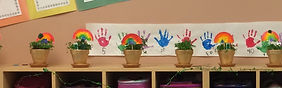
A “Student Mailbox” will exist for each student in their assigned cubby and above their hanger for backpacks, jackets, and lunchboxes. Graded work will be returned to these student mailboxes along with missed work or forms from when students were absent, “Engagement Envelopes” will be placed in Student Mailboxes on Fridays, as well as any other papers for students.
-
Students will also receive an “Engagement Envelope” they will be expected to take home every Friday in their backpacks to communicate with guardians, parents, and family. In their “Engagement Envelope” there will be papers to be signed, notices, monthly newsletters, invitations to classroom events and school events, requests for fieldtrip/other money, and happy notes from time to time for guardians, parents, and family. They will return this Engagement Envelope every Monday to the “Turn it in” Bin.
-
There will be a Noise Meter with an arrow that will be changed between Group Work, Partner Work, Whispering Please, and Silent as a Ninja depending on the lesson or activity students are partaking in.
-
The teacher will also use Attention Chants, which are a call and response type technique. Phrases like “Class, Class” will be used in order to quiet the classroom, the students will acknowledge the address by responding with “Yes, yes.” Other attention chants will also be used!
-
A Job Chart will be used and positions will change weekly. It will include jobs like “Plant Patron” for watering plants, Line Leader, Light Monitor, Germinator (for Hand Sanitizer,) Caboose, and Door Holder. Jobs like Material Manager and Message Carrier will be based upon student needs. Students that struggle to stay focused, need to walk, or in need of some time outside the classroom will be assigned jobs like Message Carrier or Material Manager often.
-
A Classroom Calendar with student birthdays, school and classroom events, field trips, important information, and more will be posted on the whiteboard at the front of the room.
-
A Student Popsicle Stick Jar with all the student’s names written on sticks will be at the front of the room next to the projector and will be used for choosing students to answer “what, where, who, why, when” questions, to give solutions, share what method they used to get to a solution, share previous knowledge, repeat information, directions, or assignments, and to share their opinion. The teacher can choose alternative names when specific students are not present, behavior is an issue, or at their discretion without students’ knowledge when needed.
-
A “Brain Booster” Jar will also be in the cubby at the front of the class and when the teacher deems a Brain Boost is necessary, either the teacher or a student will choose a popsicle stick out of the jar with a 3-5-minute activity. Examples include doing a dance using Brainpop, practicing our class dance to our class song, singing along to a video like “The Power of Yet” by Janelle Monae, “What I am” by Will I Am, or “Multiplication Mashup” on YouTube, doing a guided meditation, performing a breathing activity, or drawing out one’s feelings, writing a “Rose, Bud, Thorn” for the day, doing a Word or Letter “Popcorn” and more.
-
The Carpet will be used for morning meetings, whole group discussion, and for teacher led read alouds after recess.
-
The Project Room will be used for art projects, science experiments, and any messy or active lesson plans or activities.
The End of the Day Procedure:
-
The End of the Day Procedure will begin with the transition “Taking Care of Business,” which will signal 15 minutes of Independent Work Period.
-
Following Independent Work Period, “The Man” will signal it Independent Work Period is coming to an end and it is time to clean up Family Group Tables, the areas around them, and the rest of the classroom.
-
The teacher will review the homework, any textbooks needed for the homework, and to pass out any papers corresponding to the homework. Students will write the homework down in their agenda, place any papers in their Homework Folder, and collect their Engagement Envelope if it is Friday.
-
When “Hold On, We're Going Home” comes on, they will check their Student Mailboxes, back up their backpacks, and put their chairs on their desk. By the end of the song the students should be waiting on the carpet and ready to line up for various busses, walk home, and after school program.
-
The Classroom Climate will be first and fore mostly a family. It will be a place where students feel cared for, respected, and worthy. Furthermore, it will be a safe space that is allows creates a welcoming, warm, cooperative, cooperative, and inclusive community. The classroom will be a learning environment that inspires kindness, care, and respect for all students, teachers, parents, and people who enter.
-
The classroom will be a place where “different” is celebrated, because truly everyone is different! Students will work together regardless of difference in beliefs, abilities, opinions, interests, sexuality, race, gender, etc. Differences, strengths and weaknesses, and cultural, religious, and racial diversity will be celebrated, communicated, and clarified in a variety of means.
-
Various class meetings, lessons, activities, homework assignments and read a-louds will establish the classroom climate and strengthen the classroom community. On the first day of school the year will start with a puzzle activity where each student is given a piece of a puzzle to decorate for homework. The following day the art or decoration on puzzle pieces will be explained by each student in the class meeting. The teacher will then ask the students to put together the puzzle. One they have finished the concept of the puzzle pieces as all looking individually different but creating one whole, big, beautiful puzzle will be discussed. The Puzzle will be hung on the corkboard wall as a reminded of the importance of unity and community.
-
Other activities include the creation of a “Get to Know Me” Book, “What I like About You” Activity, Use of the Peace Rose, an Empathy Beads Activity, Classroom Guest Speakers, the Crumpled Heart Lesson as well as many more class community building, SEL centered, and confident building, and peer group centered lessons and activities, which will all be used to continue the strengthening of the class community.
-
There will be a “Student of the Week” for the first 22 weeks and the class and teacher will learn about a different student each week in more depth during Morning Class Meeting. Students will be invited to share their page in the “Get to Know Me” book, bring in pictures, and/or one or two personal items in for their 3-5-minute sharing time.
-
The creation of Charts like “I feel ____...”, “I need ______,” the use of Stuffed Animals, Stress Balls, Problem Solving Wheels, Warm Fuzzies, and Emotions Thermometer, etc. will be introduced to the classroom setting and to specific students throughout the year as needed.
-
Behavior Management in the classroom will follow a Logical Consequences approach and behavior will be communicated, monitored, recorded using Class Dojo. The Classroom Rules and Consequences will be posted at the front of the room where they can be easily viewed, read aloud by students, and referred too. A Token Economy System will be used alongside a Class Compliments Jar.
-
Behavior Management will be monitored, recorded, and communicated daily with guardians using Class Dojo. Class Dojo works on an Individual Level for each student, as well as on a collective level for Family Group Tables.
-
Class Dojo will be monitored on the teacher’s Laptop and IPad, and record the of behavior of individual students, Family Group Tables, and the whole class. Recording of both positive and negative behavior will be done when it occurs, and on rare occasions, as close to the time as the behavior occurred as possible. Class Dojo will be linked to the classrooms sound system which will allow students to be able to hear point deductions and additions when they occur on the App. Class Dojo will be shared with parents, and will be used as a form of communication between the teacher and student’s guardians.
-
Family Group Tables and occasionally Individuals, will work together to earn “Dojo Dollars.” Three Dojo Dollars will be given to the table that has the most Classdojo points at the end of the day. Occasionally the teacher will also reward “Dojo Master,” the student/s that have the highest amount of Class Dojo points with 5 Dojo Dollars at the end of the day.
-
Students will be able to redeem their Dojo Dollars for access to the Teacher's Treasure Chest, the Classroom Coupon Jar, or to choose the Classroom Coupon of their Choice. The amount of Dojo Dollars varies depending on which reward the students want access to.
-
Teachers Treasure Chest - When students reach 15 Dojo Dollars they may redeem their Dojo Dollars for access the Teacher's Treasure Chest, which they will be able to choose one item from. The Teacher's Treasure Box is full of office supplies like large erasers, blank notebooks, pencil cases, pencil grips, highlighters, mechanical pencils, fun bookmarks, and more!
-
Classroom Coupons- When students reach 25 Dojo Dollars they may redeem them to reach into Class Coupon Jar. The Class Coupon Jar is jar so covered in Class Coupons students cannot see into it so that students will not know which coupon they have chosen until they pull their coupon out of the jar.
-
Examples of Class Coupons include: Wear a Hat to School for the Day, No Shoes Pass, You have won a popsicle party for the whole class!, Bring a Show and Tell Item for Morning Meeting, Use a Colored Pen Pass, Receive a Masterpiece of Art from the Teacher, Sit in a Bean Bag for the Day, Positive Note to Parents, Draw or Paint During Morning Writing, Homework Pass, Chew Gum in Class, Teacher plays a Game at Recess, Sit at the Teacher's Desk for the Day, and more.
-
Lastly, when students reach 35 Dojo Dollars they may redeem them to choose the Class Coupon of their choice!
-
If the teacher is unable to reach guardians with a phone call, the teacher will share the unacceptable student behavior in the form of a letter home or an email.
-
If student behavior reaches extremes, the teacher feels there is reason for concern about a student, or IEP’s/RTI/504 Plans/Modifications and Accommodations need adjusting or to be changed a parent meeting will be scheduled. If parents are unable to come into the school the teacher will attempt to meet them at a location convenient for them, preform a house call, or set up a skype or, as a last resort, phone meeting. Pre-establishing a relationship, positivity, and persistence, and working together are key for changes in behavior, parent conferences, and communicating negative information.
-
The Teacher will be skilled at communicating respectfully and courteously with guardians and will begin the school year by making a welcome call to each student’s guardian/s, as well as sending a welcome letter before class begins! Furthermore, the teacher will invite guardians to a “Family Information Night” within the first two weeks of school and make a positive phone call home by end of the second week of school. After the school year, has begun the teacher will make another friendly and positive phone call to the guardians of each student every three months.
-
These steps help to better create an open-line of communication and establish trust between the teacher and parents so that when unpleasant, challenging, or unexpected information, behavior, consequences, or concerns do arise, they can be communicated with ease. Furthermore, taking these steps helps to create a partnership between the teacher, parents, and school so that when issues arise the following are able to confront and address them as a team.
-
On the first day of school the teacher will read the book “The Peace Rose” to the students, a discussion will be held about why it exists and its importance, and the teacher will show the students where it sits near the differentiated library. The teacher will demonstrate how it is used and then have each student sign a Peace Rose pledge. The consequence for not abiding by the peace rose will be explained to the class too, and will be a call home to parents/guardians. The classroom community will acknowledge differences respectfully using this peace rose.
-
According to Including Students with Special Needs, “Teachers who communicate respect and trust to their students are more successful in creating a positive classroom environment in which fewer behavior problems occur,” (Friend, 2015, p. 146.)
-
Class Compliments Jar: When the class has adhered especially well to class rules for an entire subject block or academic arts block, for a guest speaker, field trip, or special occasion, or successfully and collectively all turns in their homework to the “Turn-It-In Bin” on a day all students will receive collective Class Dojo points. Furthermore, when the class demonstrates exceptional teamwork, respect, effort, artistic ability, celebration of differences, conflict resolution or inclusiveness the class will collectively receive class dojo points. When the class collectively receives ClassDojo points, beans will be placed in the class compliment jar. The number of beans placed in the jar will correspond to the importance of the action or behavior demonstrated by the class.
-
At the beginning of the year the class will vote on the reward they desire to earn, and then following every time the jar is empty they will vote again.
-
The students will work toward earning beans until the beans amount to reach their Class Compliments Reward. The class will receive their Class Compliments Reward no later than the following week.
-
Level 1= 5 Extra Minutes Talking at Lunch
-
Level 2=10 Extra Minutes at Recess
-
Level 3= A Class Theme Dress Day (Ex. Pajama Day!)
-
Level 4= Movie w/ Popcorn
-
Level 5= Ice Cream Sundae Party!
-
-
Individual Behavior Management Plans will be created as they become necessary and the use of a colored card system will be used as the standard procedure for individualized plans. Students will be discreetly given a colored card at their desk to signal a warning, consequence 1, consequence 2, and final consequence for unacceptable behavior. Students first be issued a yellow card, which will signal a warning accompanied by a private correction of behavior where the teacher will make a clear verbal warning illustrating the unacceptable behavior and why it was unacceptable, followed by a discussion that includes questions to illicit reflection, alternative choices, and consequences. If negative behavior continues, the then a consequence 1 card orange card will be distributed and the student will be moved from their family group to do classwork at a separate area, once again correction and discussion will follow. If behavior continues in a negative manner the student will be given a consequence 2 card and spend recess in the "respect room" (a school wide approach) and write about their behavior, why it occurred, what they can do instead next time, and transcribing the peace rose pledge. Lastly, students will be given a purple card, signaling a call home to guardians will now be in effect.
-
The recording and documentation of behavior will be done using Class Dojo, which will note details of the behavior including time, actions/behaviors, who or what they were directed at, and when applicable, motives, and goals. However, individual behavior modifications will also be created in terms of what works best for each individual student. Clip Up Charts using Numbered Clips, Sticker Behavior Charts linked to the Token Reward System, Yellow, Orange, and Red Warning Flash Cards, Positive Behavior Whole Punch Cards, and other Individual Behavior Management Systems will be adapted, modified, and tapered off as needed and as the teacher, guardians/parents, school counselor or psychologist and IEP/504 team sees fit.
-
Music will be used to signal transitions throughout the day, and to help students gauge how much time they have to finish an assignment, to clean up, to put away writing journals, textbooks, or manipulatives, etc. Hand Signals will be used to communicate quietly and efficiently. Furthermore, in order to keep students engaged, interested, focused and motivated the class will spend no more than 45 minutes at a time working at their desks. The “Brain Booster Jar” will be used in order to energize and engage students in periods of time where they lose focus, motivation, or energy.
-
Throughout the day the students will switch and transition through seated whole group activities and independent work, to movement, to out of seat whole group activities, to partner activities, small group activities, or activities working one on one with the teacher.
-
Hand Signals will be used to communicate throughout the day to minimize noise and distractions during lessons (Booker, 2016). Students will do the following to signal specific needs:
-
One Finger will signal “I wish to get up from my seat, but remain in the classroom.”
-
Two Fingers will signal “I wish to get up from my seat, and leave the classroom."
-
Three Fingers will signal “I need your help."
-
A Raised Hand will signal “I would like to talk.”
-
Thumbs Up will signal “I have completed my work” and “I understand.”
-
Thumbs Down will signal “I am not done yet” and “I do not understand.”
-
-
The “Brain Booster Jar,” Stretching, Meditations, and Yoga will be used to get students out of their seats as well as to keep students active and engaged after transitions. Transitions will be communicated using music and will often include a change of content area, as well as location (rug, kidney bean table, bean bag chairs, seats.) Students will often be instructed to choose a comfortable space around the room, an arm’s length away from other students, for independent reading.
-
Musical Transitions using specific songs will signal specific transitions through the day. Music will also occasionally be played during independent practice. Musical Transitions will be constant and remain the same throughout the year. The playlist will be made using YouTube and will correspond precisely to the amount of time students have to get ready for the next activity, lesson, or to leave the classroom. The music will connect through the teacher’s laptop using the classroom speakers.
-
All songs will be lyric checked online and online on YouTube before being played.
-
Music will occasionally play for independent work periods and will primarily be lyric free and instrumental.
-
How to Use Musical Transitions: Each day before school starts, music will play to help enter the classroom at a level zero volume, stay on task, and focused after they enter the classroom. The “Pre-School Bell Playlist will begin at 7:00 am, when school doors open, a copy of the “Pre-School Bell Playlist” is attached above. In order to signal the official start of the school day and to communicate there is 10 Minutes until Morning Writing is over, “We are Family” by Sister Sledge will be played at 7:20 AM. Then 3 minutes before School Wide Announcements begin, at 7:27AM, “Respect” by Aretha Franklin will play. By the end of “Respect” students should have writing notebooks put away and be ready for the announcements.
Musical Transitions Will Go as Follows:
7:17 am – “Better Together (Rhythms del Mundo Remix)” By Jack Johnson: Signals 3 Minutes until School Starts.
7:20 am - “We Are Family” By Sister Sledge: Signals the official Start of 7 Minutes of Morning Writing.
7:27 am – “Respect” By Aretha Franklin: Signals Morning Writing is coming to an end and 3 Minutes till School Announcements.
7: 58 am – “867-5309” By Tommy Tutone: Signals Class/Morning Meeting is over and there is 2 Minutes until Math Block Begins.
8:43 am – “Weird Science” by Oingo Boingo: Signals Math Block is over and 2 Minutes until Science Block begins.
9:30 am – “Clocks (Coldplay Cover)” By Buena Vista Social Club: Signals Bathroom Break for 10 Minutes and then Academic Art Blocks until 11:00 am.
11:07 am - “Can’t Stop the Feeling” By Justin Timberlake: Signals line up for lunch, class is leaving for the cafeteria in 3 Minutes. (“Peanut Butter Jelly Time” by Chip-Man & The Buckwheat Boyz)
11: 50 am – “A Change is Gonna Come” By Otis Redding: Quieting down after lunch, Lunch Boxes away, and Bathroom Break. Following the teacher will begin “Read Aloud” and start reading aloud the current class book.
12:15 pm – “ABC” By Jackson 5: Signals Read Aloud is over and 2 Minutes until ELA/ Reading Block Begins.
12:57 pm - “Viva la Vida” By Coldplay: Signals 3 Minutes until Social Studies begins.
1:45 pm – “Clocks (Coldplay Cover)” By Buena Vista Social Club: Signals Bathroom Break for 5 Minutes.
1:50 pm “Taking Care of Business” By Bachman Turner: Signals 15 Minutes of Independent work period is beginning.
2:02 pm “The Man” By Aloe Blacc: Signals 3 Minutes Independent Work period ends in 3 minutes, to retrieve agendas, and the beginning to the end of the day routine.
2:10 pm “Hold On, We're Going Home” By Drake: Signals Clean Up, Pack Up, and Dismissal will begin in 10 Minutes. (Song Alternative: Bye, Bye, Bye” By *NSYNC)
-
“Happy” By Pharrell Williams will be played for Classroom Compliment Jar Completion!
-
Alternatives Songs for Transitions include, but are not limited to: Walking on Sunshine by Katrina and the Waves, Here Comes the Sun by The Beatles, Build Me Up Buttercup by The Temptations, You’ve Got a Friend in Me by Toy Story, Say Hey (I Love You) by Michael Franti & the Spearheads, The Dot Song by Emily Arrow & Peter H. Reynolds, On Top of the World by Imagine Dragons.
Classroom Routines and Procedures
Classroom Climate
Use of Time & Transitions
Classroom Managment